

The First Bloom: Welcoming Ugadi with the Weaves of New Beginnings
The air smells different on Ugadi morning. The Ugadi Pachadi sits ready on the counter: neem for bitterness, jaggery for sweetness, and raw tamarind for sourness, all in one bowl. This recipe embodies the philosophy of the Telugu New Year in a single taste.
Ugadi draws from the Sanskrit words "Yuga" and "Adi," the beginning of a new age. According to the Brahma Purana, Lord Brahma began creation on this exact day, setting the stars, the seasons, and the harvest calendar into motion. This date is not a calendar reset. It is the day you consciously choose what you carry into the year ahead.
In South Indian tradition, how you begin this day has always started with what you drape. The "kotha batta," new clothes in Telugu, is an act of intention. At Tulsi Madras, we believe that intention deserves two of the Deccan's most significant weaves: the Kanchipuram and the Gadwal. Here is a closer look at the sarees we have chosen for your Ugadi this year.
The Earth in Silk: Kanchipurams for the Morning Puja
There is a particular stillness in a South Indian home on Ugadi morning. The lamp is lit, the flowers are laid, and the puja begins. For generations, the Kanchipuram silk saree has been the chosen drape for this moment because some fabrics carry reverence that goes beyond the thread.
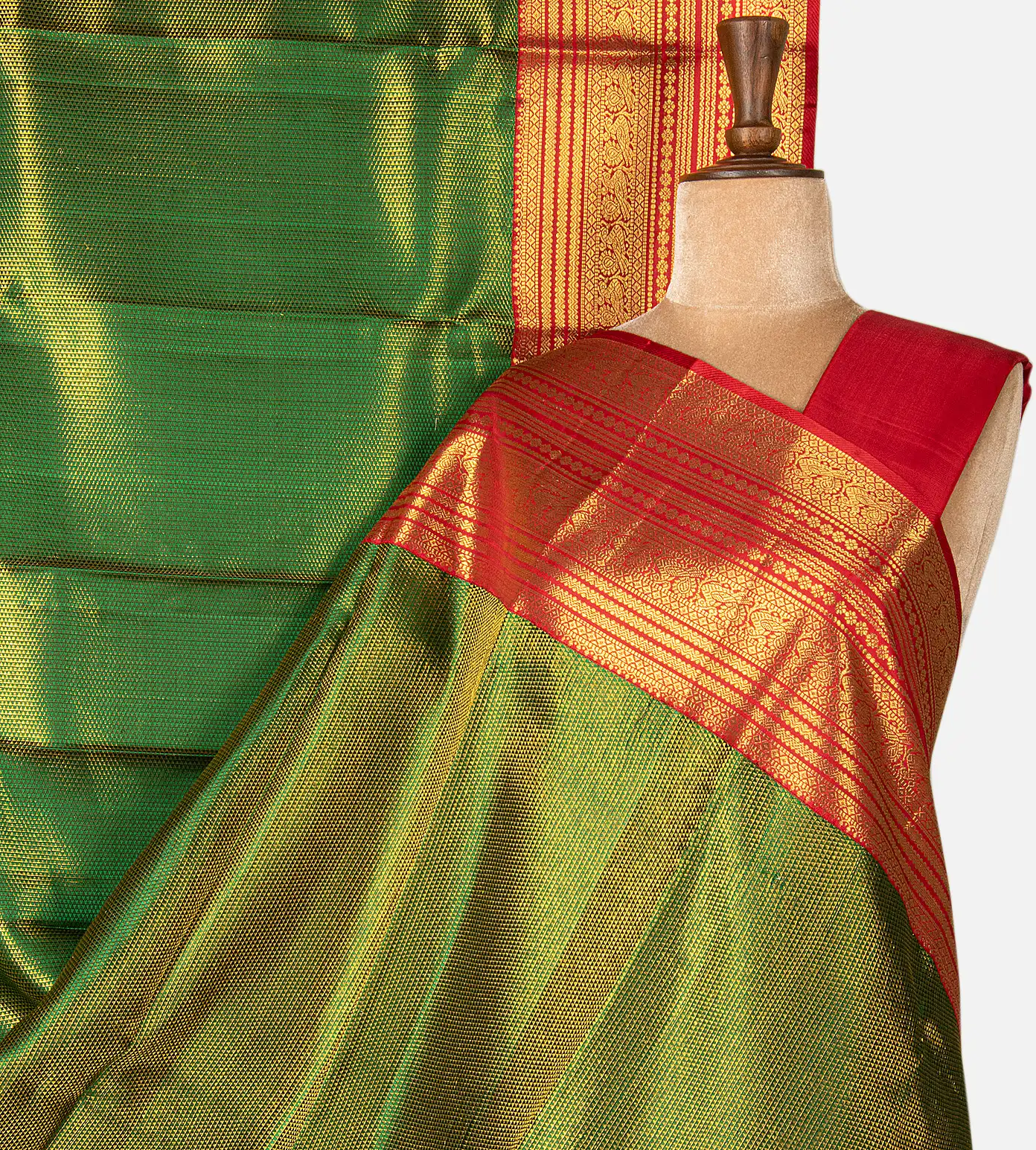
The Verdant Start: Green Kanchipuram Silk Saree
Mango leaves have marked auspicious thresholds in South India since the Sangam period, over 2,000 years ago. The green mango leaf toranam tied at your entrance is not a decoration. It is an invitation for prosperity to cross the threshold. Our Green Kanchipuram mirrors that same symbolism in every thread. The zari holds the morning lamp's light without competing with it. This saree is for the woman who sets the tone for the year.
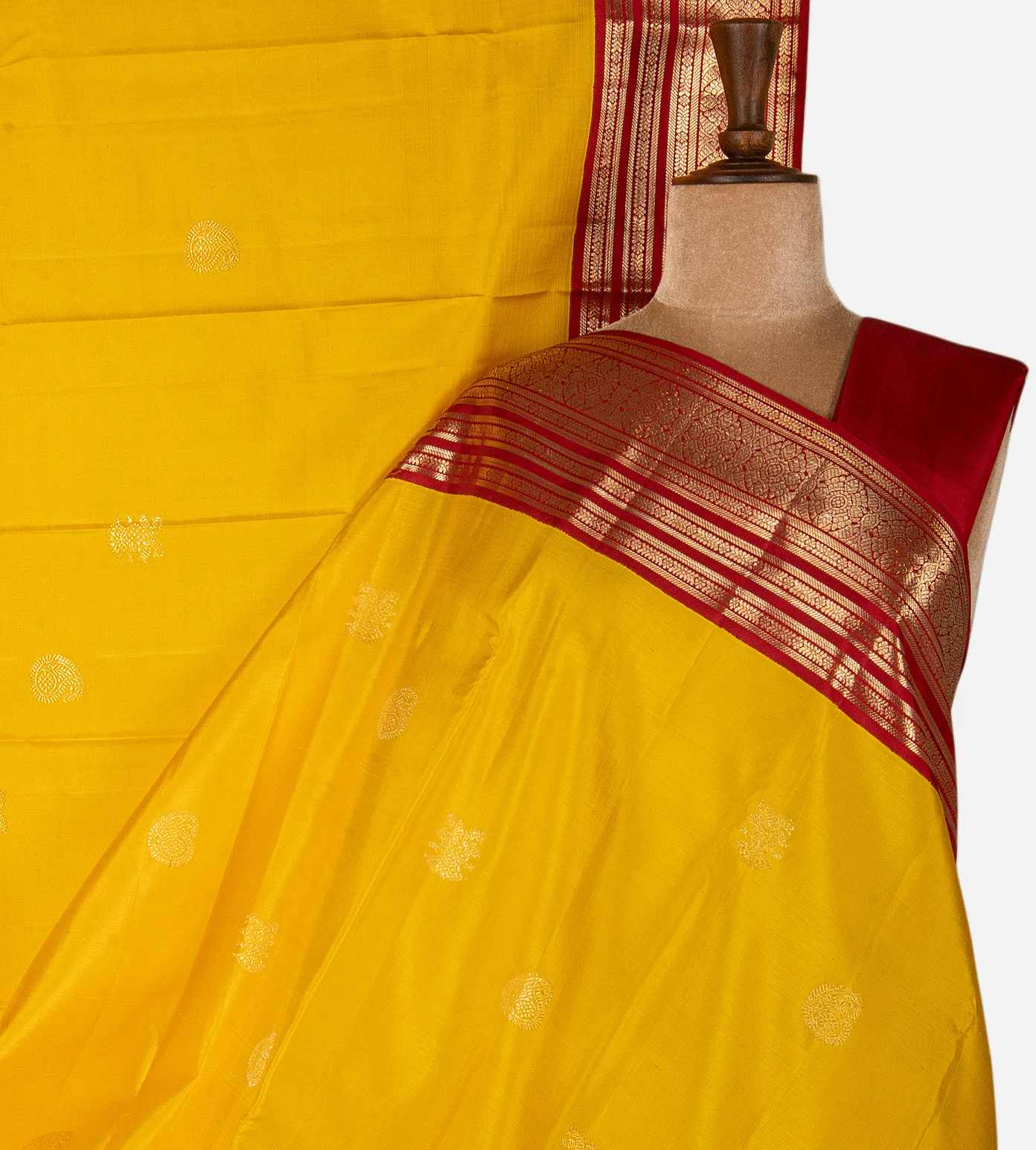
The Morning Glow: Yellow Kanchipuram Silk Saree
Yellow and turmeric have been considered auspicious across South Indian tradition for centuries, symbols of goodwill, prosperity, and new beginnings. Wearing this saree on Ugadi morning is not just a style choice. It is an invitation for everything the new year is capable of bringing; it walks right through your door.
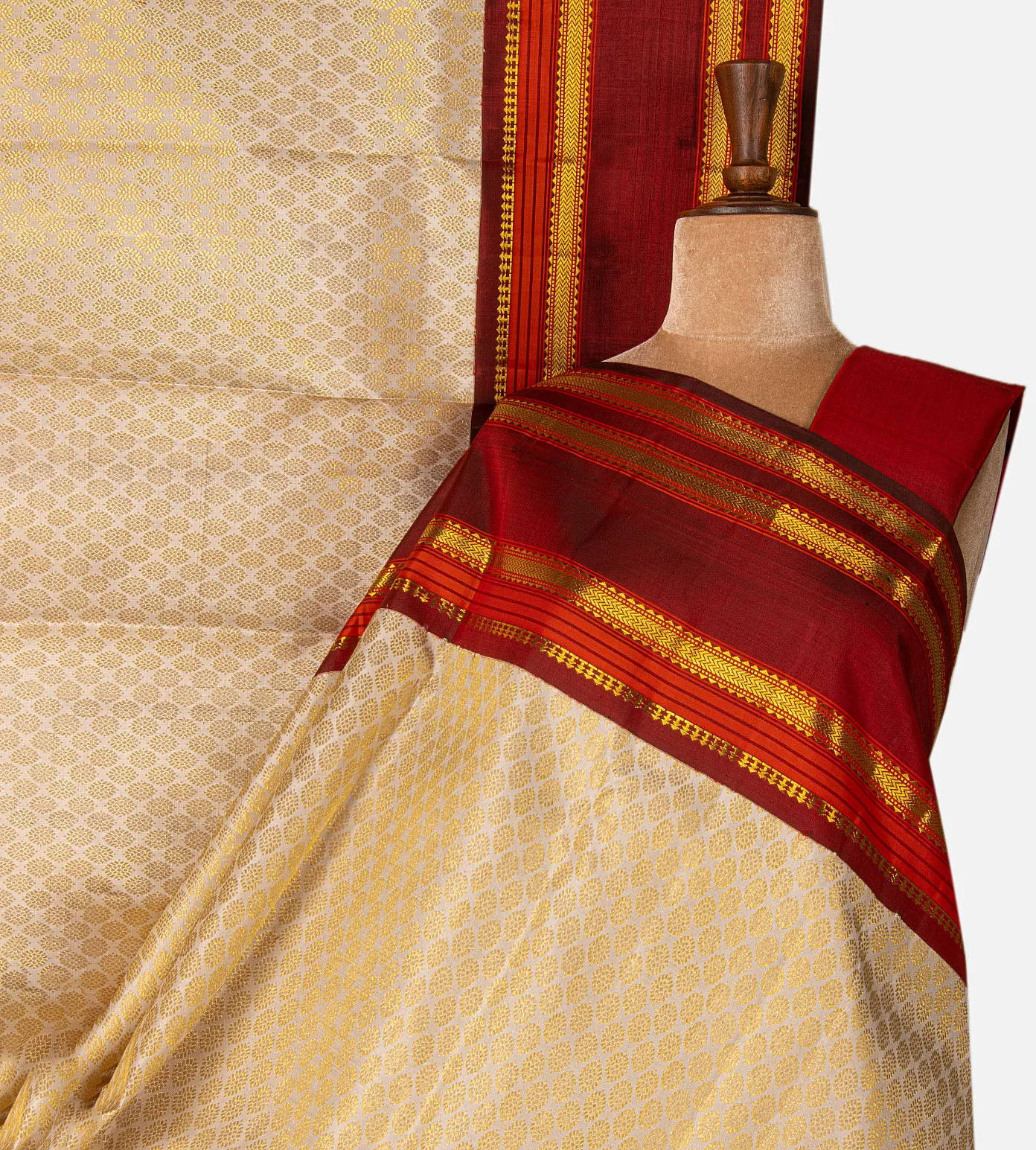
The Sandalwood Serenity: Light Beige Kanchipuram Silk Saree
Sandalwood, beige, and gold have been the colours of quiet authority in festivities long before minimalism became a trend. Silver and gold zari butta stripes run across the body, while a contrasting Korvai border with bands of thread and zari detailing draws the eye exactly where it should. Every thread is woven to reflect the grace of a woman who dresses with intention, not volume.
The Breath of Spring: Traditional Weaves for the Festive Afternoon
By afternoon, Ugadi moves from the prayer room to the street. The April heat climbs across the Deccan plateau. The Gadwal saree was made for exactly this shift.
Gadwal weaving emerged from the court of the Gadwal Samsthanam in present-day Jogulamba Gadwal district, Telangana. Weavers developed a technique called "Kupadam," where a pure silk border is interlocked into a cotton body during the weaving itself, not stitched on afterwards. These traditional weaves breathe through the afternoon and carry full festivity into the evening.
The Classic Contrast: Red Gadwal Silk Saree
Red Kumkum is applied at the threshold on Ugadi morning, a mark of prosperity in Telugu homes. The Red Gadwal carries that same intention. It is the right choice for the evening temple visit or the walk to a neighbour's home. Festive, grounded, and clearly reflecting the spirit of Ugadi.
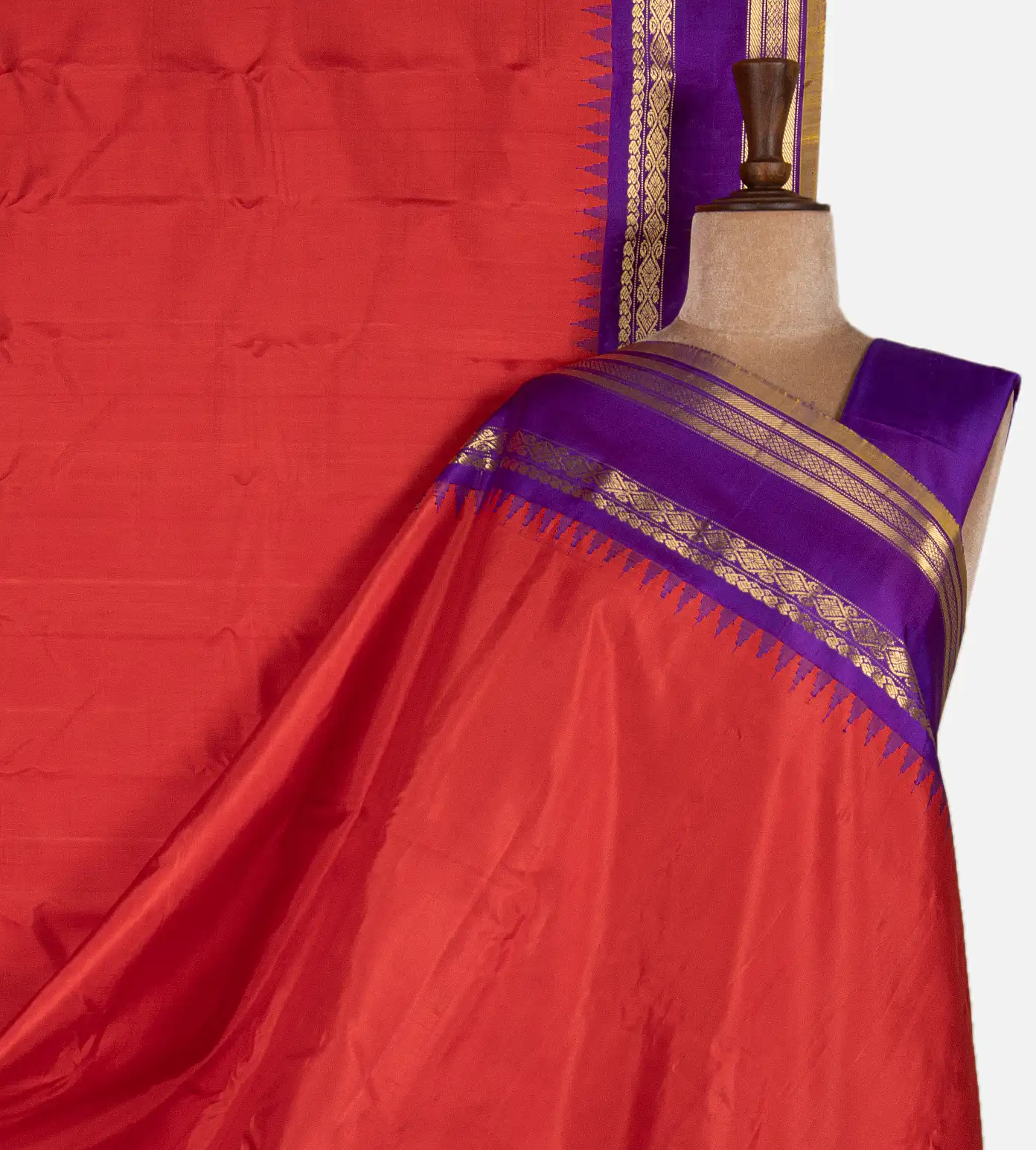
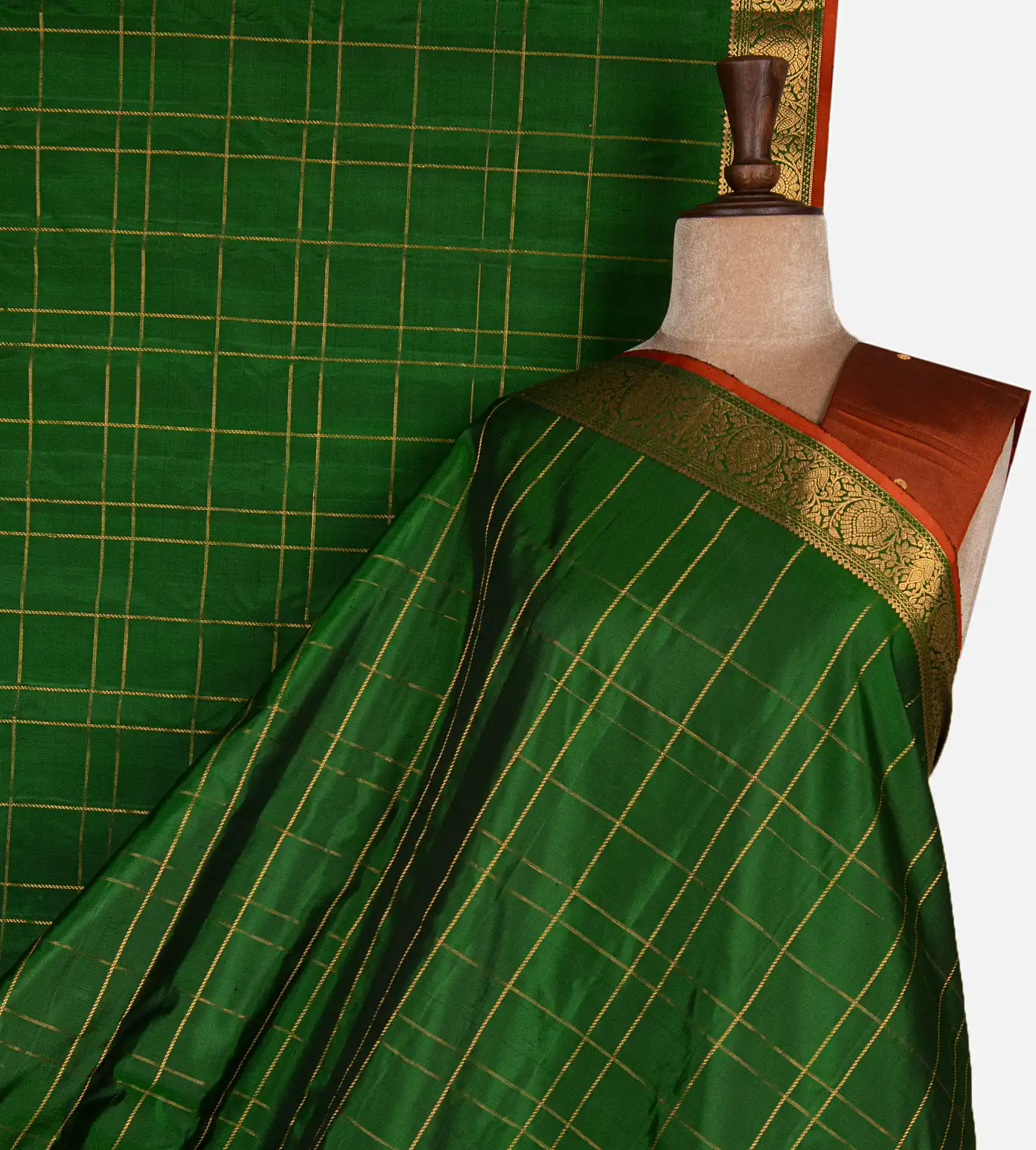
The Cool Canopy: Green Gadwal Silk Saree
The cotton body of a Gadwal releases heat rather than trapping it. Zari checks run across the entire body, paired with a zari-detailed border that frames every drape with quiet precision. Fresh, composed, and alive with the spirit of the season. It carries the green of new beginnings from the first prayer of the morning to the last lamp of the evening.
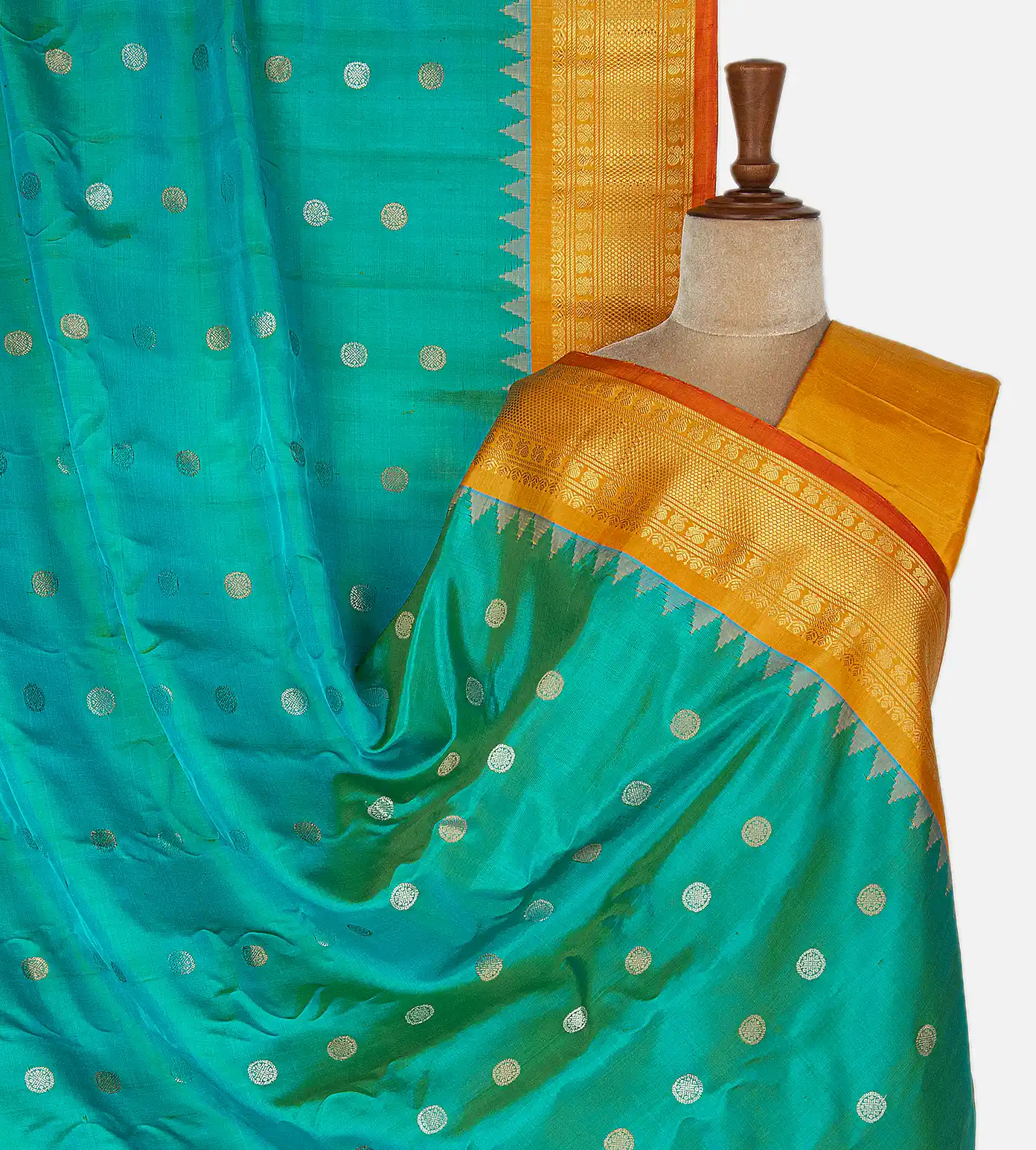
The Midnight Bloom: Peacock Blue Gadwal Silk Saree
The Indian peacock has been carved into Kakatiya temple pillars since the 12th century as a symbol of divine protection. Gold and silver zari buttas scatter across the deep teal body, anchored by a contrasting zari border that carries the full weight of the festivity. As the first day of the new year closes, this jewel tone closes it beautifully.
A Year Woven in Joy
Ugadi does not ask you to leave the past behind. It asks you to begin again, with everything you have learned. That quiet wisdom has travelled across generations, across homes, and across borders, and it arrives fresh every single year.
At Tulsi Madras, every saree carries the hands of weavers who inherited this craft across generations. When you drape one on Ugadi morning, you are not just dressing for the day. You are wearing a tradition that has never let go of its meaning. What will you wear when the new year begins? Explore the Ugadi Collection at Tulsi Madras
